
To run a Hypervisor and Virtual Machine Inventory report
The Hypervisor and Virtual Machine Inventory report provides an inventory of hypervisors each with a list of configured virtual machines. Each hypervisor is detailed on a separate page of the report.
VMs on Oracle hypervisors that are down are grouped together as Unassigned.
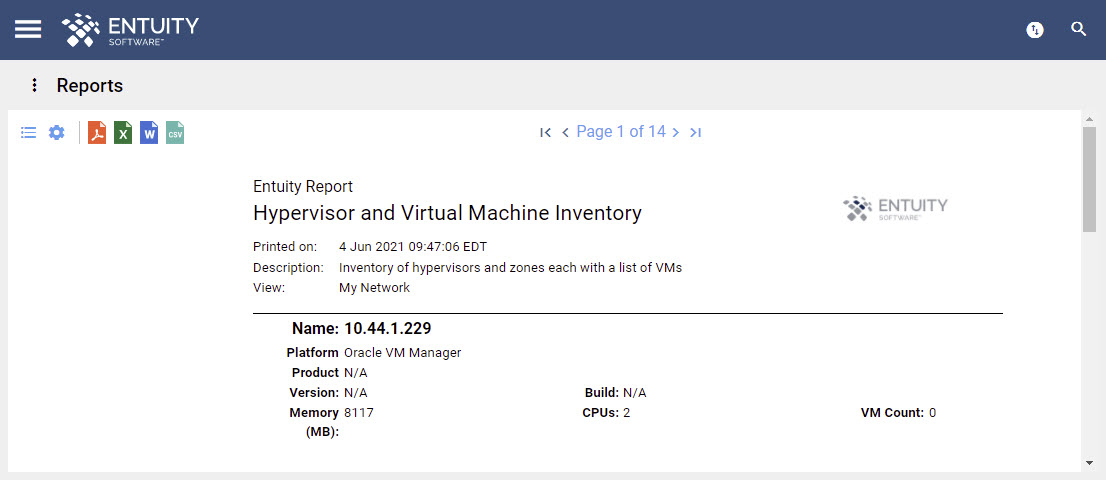
Hypervisor and Virtual Machine Inventory report details:
| Name | Description |
|---|---|
| Hypervisor Details | |
| Name | hypervisor name. |
| Platform | VM platform. |
| Product | full name of the virtualization product, which may include its name, version and build number. |
| Version | version number of the virtualization product. |
| Memory | total memory available to the hypervisor. |
| Build | build number of the virtualization product. |
| CPUs | total number of CPUs available to the hypervisor. |
| VM Count | current number of virtual machines to the hypervisor. |
| Virtual Machine Details | |
| VM Name | Virtual Machine name. |
| Memory (MB) | total memory assigned to the VM. |
| Guest OS | details of the operating system running on the VM. |
| Configuration File | primary configuration file for the virtual machine. |
To run a Hypervisor and Virtual Machine Inventory report:
- In the Main Menu, click Reports.
- This will open the Reports page. Click Virtualization.
- This will open the Virtualization page. Click Hypervisor and Virtual Machine Inventory.
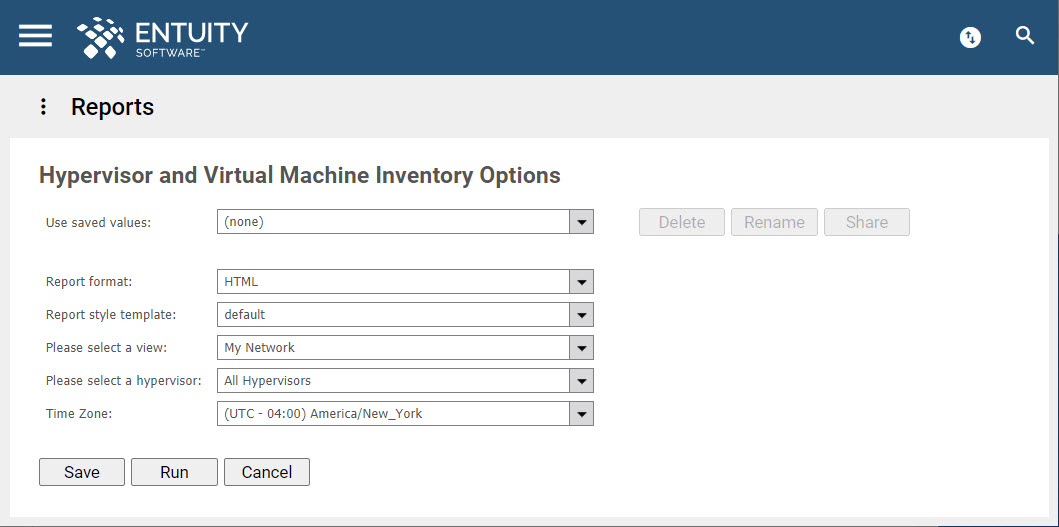
- This will open the Hypervisor and Virtual Machine Inventory Options page.
- If you want to reuse previously saved report values, select it in the Use saved values dropdown field.
- Specify the format of the report in the Report format field.
- Specify the View containing the hypervisor against which the report is to be run in the Please select a View dropdown field. From ENA v18.0 P06 upwards, you can drag Views into this field from the Drop Box.
- Specify the hypervisor against which the report is to be run in the Please select a View dropdown field.
- ENA v17.0 P08 upwards: Specify the time zone to which you want the reporting period to apply. By default, this is set to None, which means that the time zone of the host/consolidation server is used.
- Click Save to save your report values, Run to run immediately, or click Cancel.
Comments
0 comments
Please sign in to leave a comment.